TCP Vs UDP and IT's Real Use Cases
TCP vs UDP: When to Use What, and How TCP Relates to HTTP

I have joined and started learning Software development with ChaiCode Web dev Cohort 2026 and very excited😊
When building applications, developers need to take decision between two core internet protocols TCP & UDP. This decision can make or break the performance of application affecting everything from user’s experience to system reliability.
Understanding the difference between TCP and UDP determines whether your online games feels responsive, video calls stays smooth, or your financial transactions completes successfully.
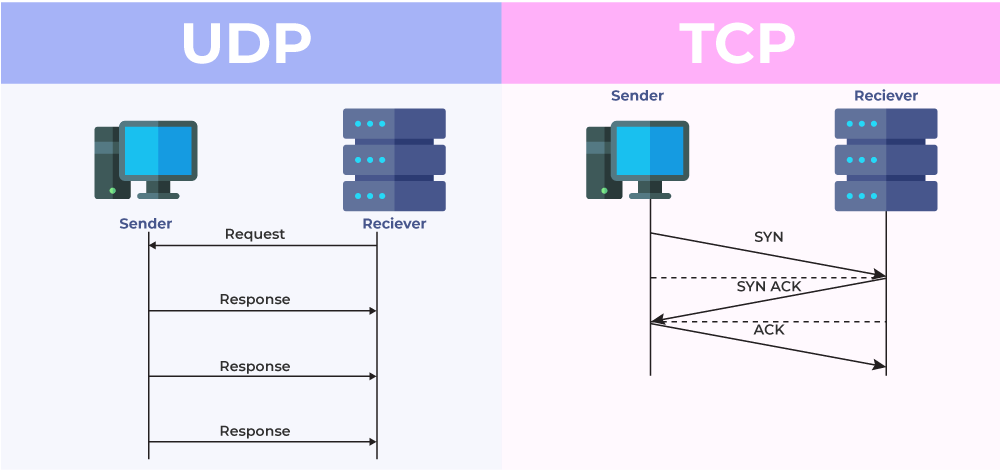
What are TCP and UDP ?
Both TCP (Transmission Control Protocol ) and UDP (User Datagram Protocol) operates at the transport layer of Internet protocol suite. They are responsible for moving data between application across networks but they have fundamentally different approach to do this task.
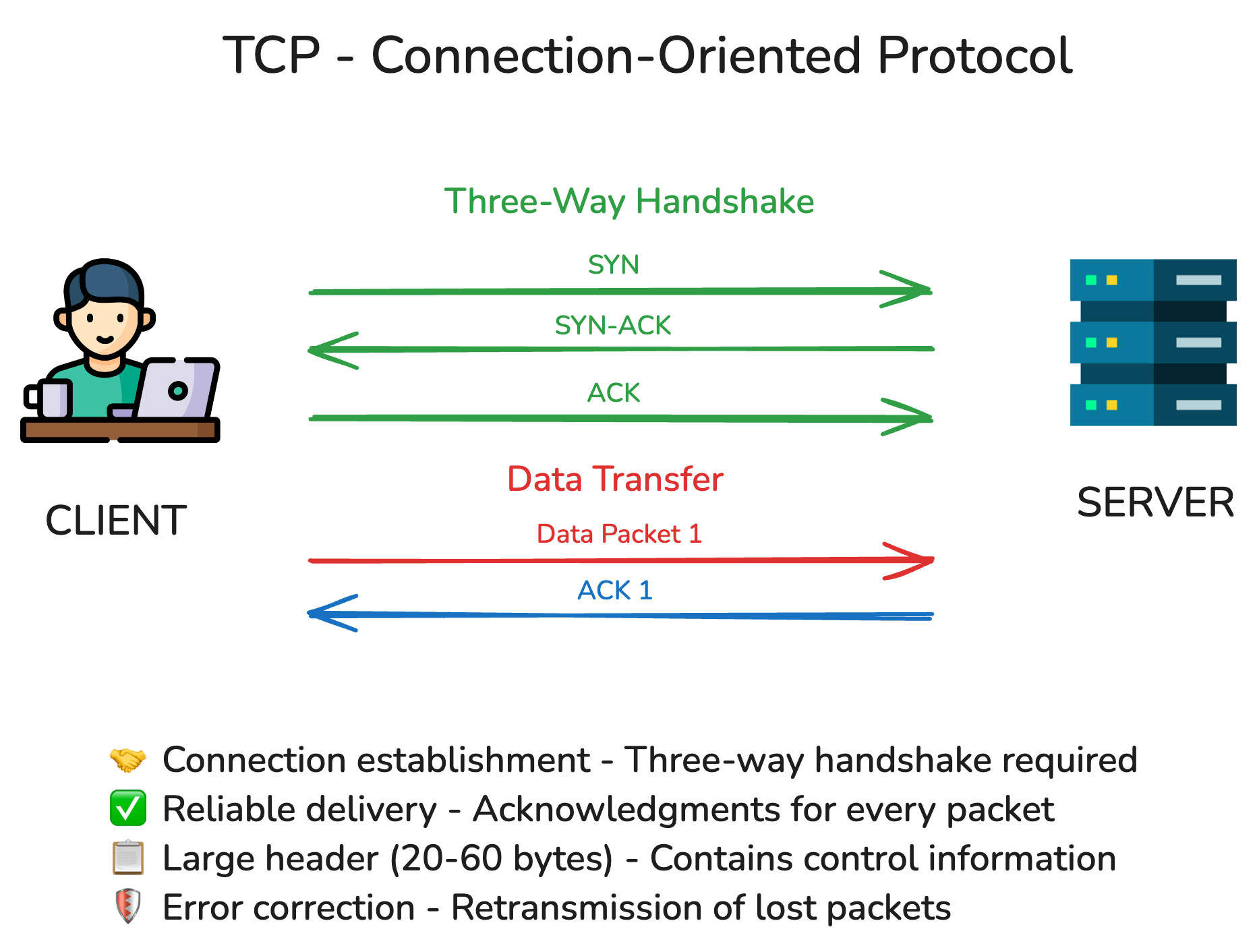
TCP establishes reliable connection between sender and receiver through three way handshake . it guarantees the proper delivery of data packets in order manner which makes it best choice for the application where data accuracy is non- negotiable.
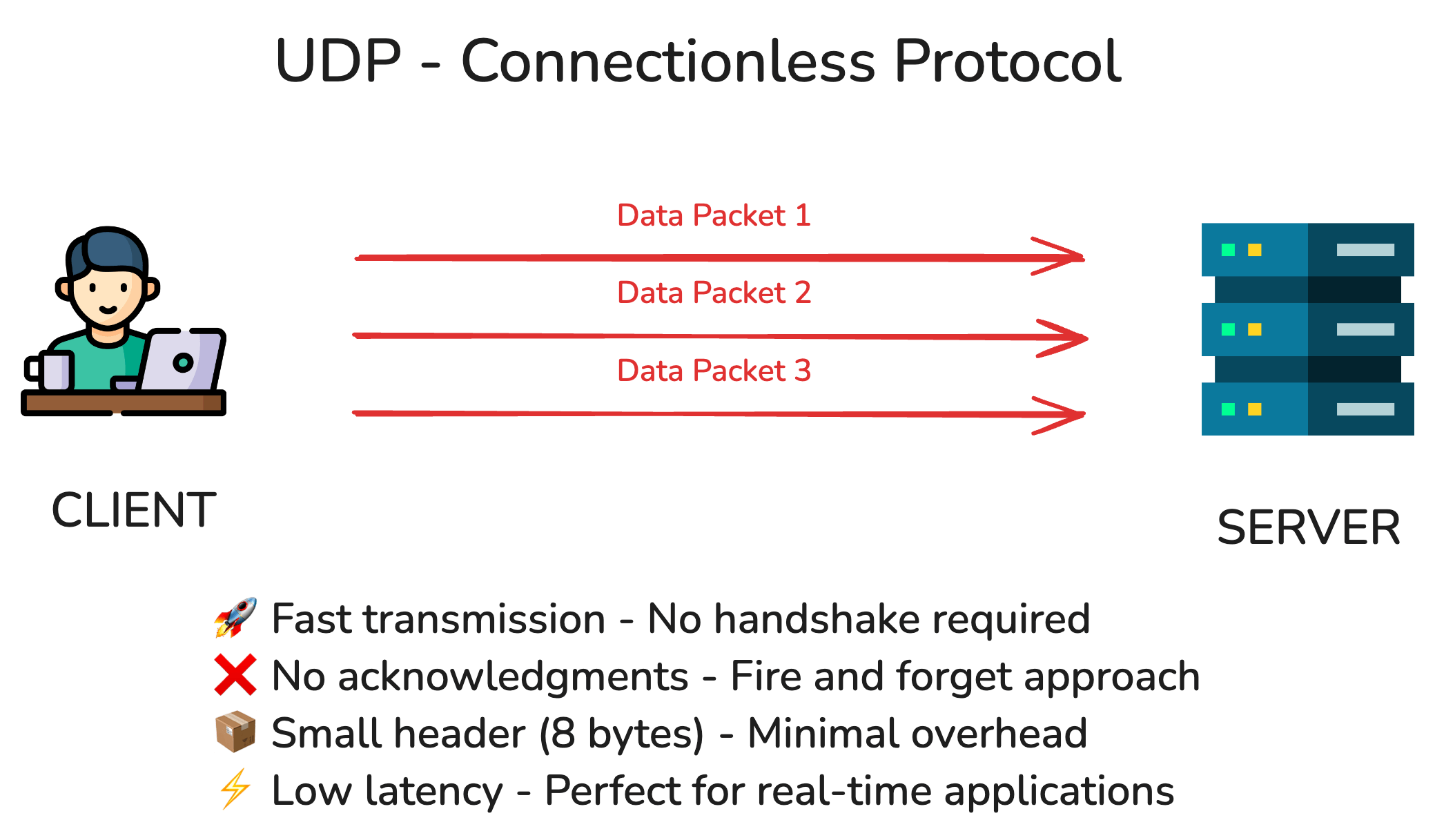
on other hand UDP takes fire and forget approach. it immediately send data without establishing the connections or waiting for confirmations. it gives priority more on speed over guarantee the delivery of data packets.
When To Use TCP
TCP shines in the scenario where data integrity trumps speed. Its reliability mechanisms make it essential for the applications that cannot tolerate data loss or corruption.
Web browsing and HTTP/HTTPS Every time you visit website .TCP ensures the HTML,CSS and Javascript arrives completely and in order. The missing piece of any code breaks the entire application making the TCP’s reliability crucial for web application.
Email service Email protocols like SMTP, POP3 and IMAP use TCP while sending email. you do not want the some parts of emails disappear during transmission.
File Transfers whether you are downloading files or uploading in cloud use TCP which ensures that every bit of data intact. File corruption make file unusable .
Financial Transactions Banking applications and Ecommerce platforms depend upon TCP reliability for secure transactions. The guaranteed delivery and error checking builds trust on financial operations.
When To Use UDP
UDP excels in applications where speed matters more than perfect delivery. its less overhead and immediate transmission make it ideal for real-time applications.
Online Gaming Multiplayer games need instant response to player actions. so UDP speed ensures that when you press button , action is register. Games can handle occasional packets loss by interpolating missing data or request to updates the game.
Live streaming platforms like Twitch use UDP for streams because They focus on providing smooth playback over perfect quality. The few frames lost does not interrupt on live streaming.
Video Conferencing applications like Zoom, Skype prioritize real-time communication over than perfect video quality and audio quality. UDP enables natural communication by minimizing delays, even if occasional glitches occur.
DNS Queries Domain name lookups use UDP because they are typically small, single-packet request that benefits form UDP’s speed. if query fails, it’s faster to retry than to establish TCP connection.
What is HTTP and Where it fits on TCP and UDP

HTTP is request-response protocol that operates at application layer of Internet protocol suite , when you visit website , first browser talks to HTTP . HTTP relies in Transport layer (TCP, UDP) . The Transport layer relies on Network Layer (IP) and Network Layer relies on Physical layer (Ethernet , WiFi) to move the packets of data over network. HTTP itself does not move data directly , instead it relies on a transport layer Protocol underneath traditionally.
How HTTP Uses TCP
Webpage (HTML,CSS, JS) must arrive before webpage load so TCP guarantee this through acknowledgement, retransmission and ordering of data.
TCP is connection-oriented. It does three-way handshake before exchanging data through request and response.
HTTPs add encryption (TSL/SSL) on the top of TCP, ensuring confidentiality and Integrity.
Hybrid approaches and modern protocols
Many modern application don’t choose exclusively between TCP and UDP. Instead they use both protocols strategically.
s Protocols builds reliability on top of UDP. combining UDP’s speed and TCP’s reliability This approach powers HTTP/3 and modern application.
How Big Tech Picks TCP or UDP
Even the biggest Tech companies have to pick between TCP and UDP. They choose based on whether they need speed, reliability or mix of both.
Google- Youtube and Search when you watch Youtube or do google search Thereare often using QUIC Protocol which runs on UDP. it skips the slow handshake that TCP does and start sending data right away. QUIC ensures the order of data delivery . so you get speed of UDP without stuff going missing. This is why videos and pages load faster even on bad connection.
Zoom uses UDP for voice and Video calls because speed matters more than perfection. small glitch in audio is fine but not a. long delay. when ypu send chat or files , zoom switches to TCP so nothing got lost
Streaming platform like Netflix use TCP for on-demand video so all the bits of data arrives in order. It takes few more time to start but runs smoothly. whereas for live events it uses UDP based tech to cut down delay so you are not reacting a way after everyone else.
Summary
Understanding UDP vs TCP is fundamental for anyone working with networked applications. TCP provides the reliability foundation for the modern web, ensuring that emails arrive, web pages load completely, and financial transactions process securely. UDP enables the real-time experiences we’ve come to expect from gaming, streaming, and communication applications.
The choice between these protocols isn’t always binary. Modern applications often use both, leveraging TCP’s reliability for critical operations and UDP’s speed for real-time features. By understanding their strengths and limitations, developers can build applications that deliver optimal performance for their specific use cases.
Whether you’re building the next great multiplayer game or a mission-critical business application, choosing the right protocol is a decision that will impact your users’ experience every day.

